
How to Get Nano Banana Pro for Ads
How to Get Nano Banana Pro for Ads
If you want faster ad creative production, stronger visual consistency, and high-quality image generation for marketing campaigns, Nano Banana Pro is built for that workflow. This article explains how to get it, how it works for ads, and what to do to use it effectively in a content and performance marketing process.
What Nano Banana Pro Is and Why It Matters for Ads
Conclusion: Nano Banana Pro is a visual model designed for text-to-image and image-to-image creation, semantic editing, multilingual typography, and style consistency, which makes it useful for ad creatives.
It is described as a Gemini 3 Pro-based visual model that can help you create ecommerce hero shots, marketing posters, and storyboards directly in the browser. For ad teams, the key value is speed plus control: you can generate visuals, refine them semantically, and keep characters, branding, and composition consistent across a campaign.
Practical advice:
- Use it when you need multiple ad variations quickly.
- Use it for visuals that require consistent branding, product framing, or multilingual text.
- Use it to reduce back-and-forth between concept, design, and iteration.
How to Get Nano Banana Pro
Conclusion: The simplest way to access Nano Banana Pro is through its web platform, where you can start creating visual assets in the browser.
According to the available information, the product is available at nanobananapro.cloud. The workflow is browser-based, so you do not need to treat it like a traditional heavyweight design tool. Instead, the typical process is to enter prompts, add references, generate visuals, and export results for reuse.
Basic Access Workflow
| Step | What to Do | Why It Helps for Ads |
|---|---|---|
| 1 | Open the web platform | Fast entry without complex setup |
| 2 | Add your prompt and reference images | Keeps the ad direction aligned with your brand |
| 3 | Choose resolution and ratio | Match placements like feed, banner, or poster |
| 4 | Generate the first version | Quickly explore creative directions |
| 5 | Refine semantically | Fix objects, text, or layout without starting over |
| 6 | Export and reuse | Build a scalable ad system |
Practical advice:
- Start with one campaign theme and one clear ad objective.
- Upload reference images for products, tone, layout, or brand style.
- Choose output ratios based on the ad placement you need.
How to Use Nano Banana Pro for Ad Creative Production
Conclusion: The model is most useful when you use it as part of a structured ad creative workflow, not as a one-off image generator.
The reference workflow includes four core stages: setting prompts and references, generating in one click, making semantic refinements, and exporting for reuse. This makes it suitable for producing ad creatives at scale while keeping the visual system consistent.

1. Set a Clear Prompt and Reference Pack
Conclusion: Good ad output starts with a clear brief and the right references.
Nano Banana Pro supports prompts plus up to 14 reference images. This means you can guide the model with product shots, brand assets, style references, packaging, mood boards, or previous campaign images.
Practical advice:
- Define the ad goal: awareness, conversion, launch, remarketing, or seasonal promotion.
- Include the product, audience context, and visual style in the prompt.
- Add references for layout, lighting, packaging, or brand identity.
- Specify language needs if the ad includes copy in multiple languages.
2. Generate Multiple Creative Directions Quickly
Conclusion: The model is designed for fast first-pass generation, which is useful for ad testing.
The available workflow says the first pass can arrive in about 10–30 seconds, with stable subjects and structure. For ads, that speed is valuable because you can produce several angles before choosing the best one.
Practical advice:
- Generate several variations for different hooks or audiences.
- Test different framing options: close-up, lifestyle, product-only, or poster-style.
- Keep one campaign structure and change only the message or visual focus.
3. Refine the Image Semantically
Conclusion: Semantic editing helps you fix ad visuals without rebuilding them from scratch.
The model supports swapping elements, extending the canvas, and removing marks through text or local selection while keeping lighting aligned. This is especially useful in ad production, where small visual changes can affect clarity and conversion.
Practical advice:
- Replace props or backgrounds when the concept is right but the details are wrong.
- Extend the canvas if you need more copy space for ads or banners.
- Use object removal for cleaner product presentation.
- Keep the lighting and perspective consistent so the creative still feels professional.
4. Export and Reuse for Campaign Systems
Conclusion: Reuse is one of the strongest advantages for ad teams.
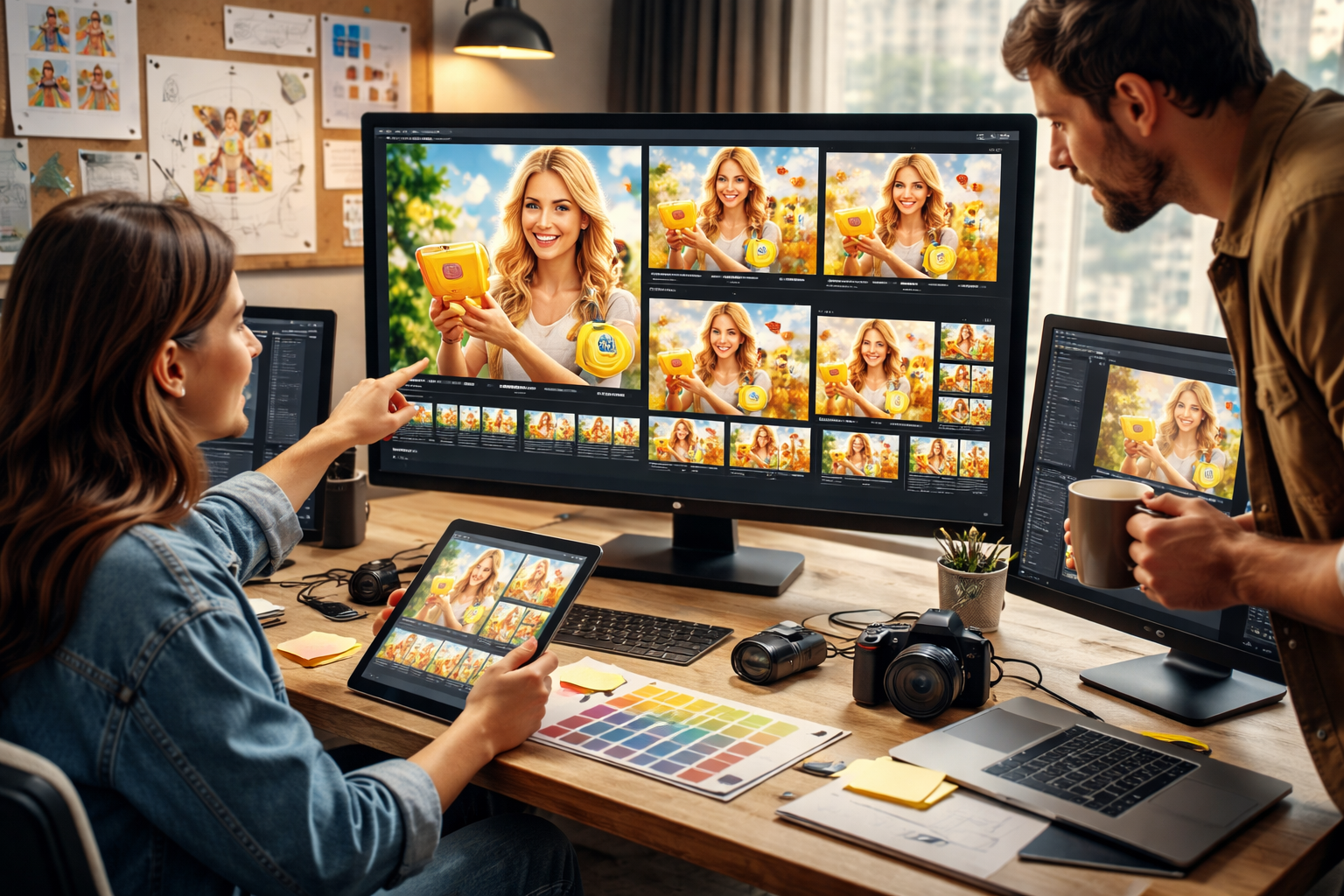
The platform supports 1K, 2K, and 4K outputs, and it also allows you to reuse characters and styles for future series. That makes it easier to maintain a campaign identity across multiple placements and iterations.
Practical advice:
- Export versions matched to the final placement size.
- Save successful style directions for the next creative round.
- Reuse characters, props, and scene language across a product launch series.
- Build a repeatable workflow for testing and scaling creatives.
Key Features That Matter Most for Ad Teams
Conclusion: The most important ad-focused features are consistency, typography, editing flexibility, and workflow integration.
Below is a practical breakdown of the features that are most relevant when the goal is ad creative production.
| Feature | What It Does | Ad Use Case |
|---|---|---|
| Multimodal generation | Creates visuals from text or images | Launch ads, product visuals, campaign concepts |
| 1K / 2K / 4K output | Supports multiple output levels | Different placements and quality needs |
| Precision text & multilingual typography | Keeps text sharp in multiple languages | Global campaigns and localized ads |
| Reference mixing & consistency | Blends references while preserving coherence | Branded ad systems and series continuity |
| Semantic edits & object swap | Changes elements without breaking the scene | Rapid iteration for performance ads |
| Reusable styles & characters | Locks in recurring visual roles | Storyboards, product series, retargeting assets |
| Clean exports & rights | Default watermark-free delivery, commercial-ready | Print and digital ad production |
| API & workflow integration | Enables batch generation and automation | Team workflows and scalable production |
Practical advice:
- If your campaign depends on text accuracy, prioritize typography review.
- If you need brand continuity, build reference sets before generating.
- If you produce high volumes, look for API or workflow integration.
Best Practices for Ads
Conclusion: The best results come from treating Nano Banana Pro like a production tool with clear creative rules.
To get usable ad assets, the prompt needs to support the campaign structure. That means you should define the object, audience, visual tone, language, framing, and any required brand elements.
Recommended Prompt Structure
- Product or subject: What should appear in the image?
- Audience or use case: Who is the ad for?
- Style direction: Realistic, illustrative, premium, clean, energetic, etc.
- Layout needs: Hero shot, poster, banner, social feed, storyboard.
- Text requirements: Headline, multilingual copy, product labels, or CTA area.
- Brand constraints: Colors, mood, materials, props, or character consistency.
Practical advice:
- Keep prompts specific and modular.
- Use references to reduce ambiguity.
- Separate visual direction from copy direction.
- Review typography carefully if the ad includes on-image text.

FAQ
Is Nano Banana Pro useful for paid advertising?
Yes. Its strength is in visual generation, semantic editing, style consistency, and multilingual typography, all of which are useful for ad creative production.
How do I access Nano Banana Pro?
The reference information points to the web platform at nanobananapro.cloud, where you can generate and refine visuals in the browser.
Can it handle multiple ad variations?
Yes. The workflow is suited for creating multiple versions quickly, which helps with creative testing and campaign iteration.
Can I use it for multilingual ads?
Yes. The feature set includes precision text and multilingual typography, including English, Chinese, Japanese, and more.
Does it support commercial-ready exports?
The reference material states that exports are default watermark-free and commercial-ready for print and digital use.
Summary
If you are looking for a way to produce ad creatives faster, keep branding consistent, and iterate on visuals without restarting from scratch, Nano Banana Pro is a strong option. The basic process is straightforward: add prompts and references, generate a first pass, refine semantically, and export for reuse.
For ad teams, the biggest value comes from:
- fast creative generation,
- consistent visual identity,
- precise text handling,
- and reusable campaign assets.
If your goal is to build a scalable ad creative workflow, start with a clear brief, strong references, and a repeatable output structure.