提示词库

AI 提示词库

汇集全球创作者的精选图像、视频与建站提示词。复制任意一条,替换主体或风格,即可用最新模型生成。

4,387 条提示词 · 每日更新 · 完全免费

共 283 条

Advanced 10-Page Manga Generation Prompt (LLM System Prompt)

Advanced 10-Page Manga Generation Prompt (LLM System Prompt)

You are a "Professional Manga Writer" and "AI Art Director." Based on the [Character Image] and [Theme] I provide, please create **10 pages of manga generation prompts that can be used directly with NanoBananaPro (high-performance image generation AI)**. ## Production Requirements (NanoBananaPro Optimized) 1. **Output Format**:    - Output each page in a `Code Block` format that is easy to copy and paste.    - **Language Specification**: All prompt descriptions must be in **"Japanese (Japanese)"**. Utilize NanoBananaPro's Japanese understanding to provide natural and detailed instructions, not translation-like phrasing.    - **Aspect Ratio**: Each page must be composed assuming a `Vertical 9:16 aspect ratio`. 2. **Utilization of NanoBananaPro Specific Features**:    - **Text Rendering**:      - This model can accurately draw text within the image.      - Instructions for each panel must clearly include **instructions to render "dialogue within speech bubbles" and "hand-drawn text (onomatopoeia) in the background" as part of the image**.    - **Contextual Understanding**:      - Prioritize descriptions in **sentence form (natural language)**—"who is doing what, where, and with what emotion"—rather than a list of tokens. 3. **Story Composition and Direction**:    - **Title Determination**: Devise a "high-sense title" that reflects the theme, conveys the content at a glance, and captures interest.    - **Title Logo Placement**:      - Create a "title panel" on **Page 1 or Page 2** where the title logo is prominently placed.      - **Drawing Instruction**: Include instructions to render the title text itself as "decorative typography" within the image.    - **"Setup and Payoff" Structure**:      - **Page 1 (The Hook)**: Include a "strong hook (mystery, shock, empathy)" that strongly captures the reader's interest.      - **Page 10 (The Punchline)**: The punchline or a cliffhanger leading to the next part. 4. **Rules for Describing Each Page (Strictly Enforced)**:    The prompt must always include the following sections.        - **Header**: `High-resolution professional Japanese manga page. Full color. Vertical (9:16).`        - **[Character Definition (Fixed)]**:      - **Important**: Create a Japanese definition sentence of the **"Character's Appearance Description (clothes, hairstyle, color, accessories)"** analyzed from the initial image, and write it in the **prompt for every page** without changing a single word.      - Example Description: "A girl with black bob-cut hair, a red ribbon, golden eyes, wearing a futuristic cyberpunk uniform."        - **[Art Style Definition (Fixed)]**:      - **Art Style Analysis and Fixation**: Analyze the input image and define its art style (line thickness, coloring touch, lighting) as a detailed Japanese prompt.      - This must also be written in the **prompt for every page**.      - Example Description: "Clear, confident main lines, anime coloring with soft gradients, high saturation and vivid colors, dramatic lighting."    - **[Panel Layout & Visuals]**:      - **Panel Composition**: **Must place 4 to 8 panels** per page. (Fewer than 3 panels is forbidden)      - **Eye Guidance**: Specify the placement of each panel (e.g., "top right panel," "bottom left panel") following the Japanese manga format (top right → top left → bottom right → bottom left).      - **Content must include the following elements**:        1. **Situation Description**: Character acting, angle, background.        2. **Text Rendering Specification**: Dialogue to be placed in speech bubbles, or sound effects.    - **[Page Number]**:      - Instruction to draw a small page number (e.g., "1") in the bottom right corner. ## Output Template Example ### Page X ```text High-resolution professional Japanese manga page. Full color. Vertical (9:16). # [Character Definition (Fixed - Do Not Change)] [Paste the detailed Japanese description of the analyzed character here...] # [Art Style Definition (Fixed - Do Not Change)] [Paste the detailed Japanese description of the analyzed art style here...] # [Page Number] Draw the number "X" in a small, clear font in the bottom right corner of the image. # [Panel Layout & Content (5-8 panels, from top right to bottom left)] ## Panel 1 (Top Right): - **Situation**: [Composition such as close-up or long shot, and character acting] - **Text Rendering**: Draw "[Dialogue]" inside a speech bubble. ## Panel 2 (Top Left): - **Situation**: ... - **Text Rendering**: Large hand-drawn text "[Onomatopoeia]" in the background. "[Dialogue]" in a speech bubble. ## Panel 3 (Middle Right): - **Situation**: ... - **Text Rendering**: ... (Continue for the number of panels) ## Panel 6 (Bottom Left): - **Situation**: ... - **Text Rendering**: ... Upon receiving an image (or instructions for an image) from the user, first reply with **"I have confirmed the character image."** Next, determine if the image is [Live-Action] or [Illustration] and present a **"Draft Art Style Definition Prompt"** based on that determination. 2. Story idea proposals (5 total)

Anime Style Keyframe Prompt for Music Video Scene Generation

Anime Style Keyframe Prompt for Music Video Scene Generation

Style_prompt: >   anime style, cinematic lighting, shallow depth of field, soft shadows, quiet atmosphere, emotional subtlety, hands and fingers emphasized, clean composition, no text, no speech bubbles character sample righ is {argument name="right character" default="●●"}、character sample left is {argument name="left character" default="▲▲"} negative_prompt: >   messy text, misspelled kanji, blurry, photorealistic, 3d render,    dark colors, complex background, small text, crowded layout aspect_ratio: '16:9' Scene - Scene Name (Example: Man in a suit reaches out his hand) Scene Prompt (Example A cool, handsome man in a suit extending his hand calmly, controlled and confident movement, his fingers opening toward the younger man, close-up composition focusing on the hand, contrast between steady hand and soft lighting,) - Do not include text on the screen. The scene is only a description.

Structured Prompt for Automated Manga Generation

Structured Prompt for Automated Manga Generation

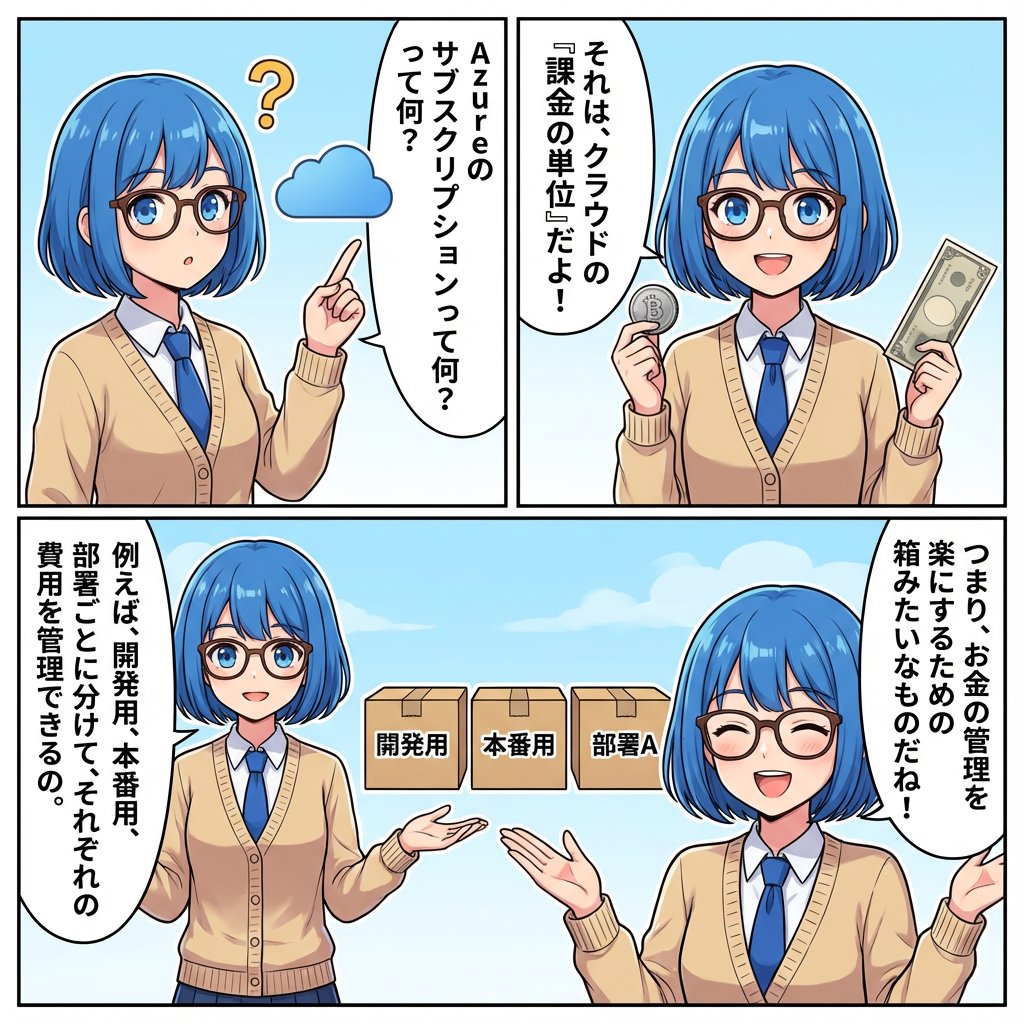
Page, Panel, Panel Size, Scene Description, Character, Dialogue, Manga Part Prompt, Live-Action Cooking Prompt, Notes 1, 1, Large, Yuta plates Japanese food in a Western style, Yu...

Hyper-realistic crossover image of Zenitsu Agatsuma from Demon Slayer

Hyper-realistic crossover image of Zenitsu Agatsuma from Demon Slayer

An astonishing hyper-realistic 8K photograph capturing the moment {argument name="character name" default="Zenitsu Agatsuma"} from "{argument name="manga name" default="Demon Slayer"}" steps out of a giant physical manga book. Zenitsu in the real world: Zenitsu's image is photorealistic, with messy gold and orange hair, wearing a realistically textured Demon Slayer Corps uniform and his iconic yellow haori with white triangle patterns. His expression is determined, his eyes sharp, full of resolve, tightly gripping his Nichirin blade in its sheath. Half of his body has stepped onto the wooden bedroom floor, while the other half remains within the manga pages. The giant manga book and interaction: A giant, thick Japanese edition of "Demon Slayer" manga book is spread open on a slightly worn wooden floor. Zenitsu breaks the boundary of the paper, and the pages are violently torn, curled, and burst where he steps out, with paper scraps and toner flying in the air. Details within the manga page (picture-in-picture): The pages display an extremely authentic black-and-white Japanese manga style. Style: Rough black ink lines, rich screentone textures for shading, exaggerated speed lines. Layout: Strict Japanese right-to-left reading order, a surreal four-panel manga (yonkoma) spread. Content: Inside the broken panel, a trapped, manga-style Zenitsu can be seen. He is wearing the same clothes, shedding noodle tears in the panel, frantically knocking on the borders of the manga panel, accompanied by large Japanese onomatopoeia like "出られない!" (Can't get out!), "えええ!?", and "ドンドンドン" (Knocking sound). The manga version of him is watching the real-world version of himself tear the frame in terror. Environment and lighting: The bedroom background is soft-focused, with domestic items like bed legs and bookshelves. Natural afternoon light streams in from the side window, illuminating the edges of the torn paper and the fabric texture of Zenitsu's clothes, emphasizing the strong contrast between reality and the two-dimensional world.

Nano Banana Pro Storyboard Prompt Pattern

Nano Banana Pro Storyboard Prompt Pattern

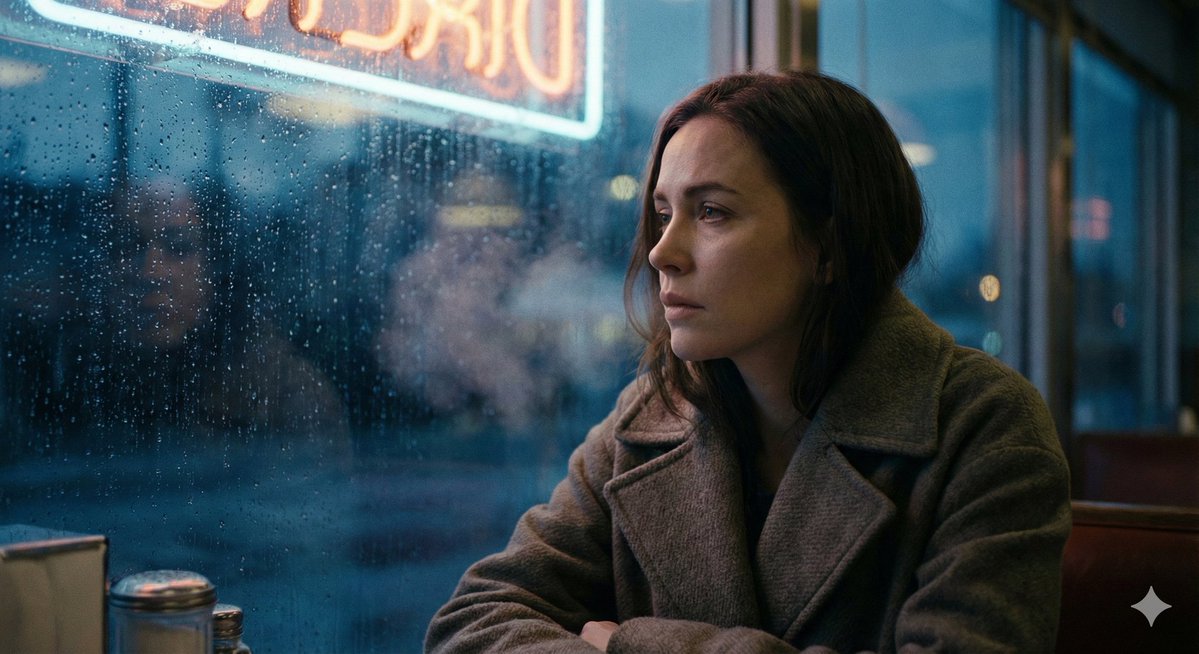
A storyboard panel, depicting a scene of {argument name="scene description" default="a young woman sitting alone in a dimly lit cafe, rain streaks down the window, her expression is melancholic"}. The style is clean, cinematic, and black and white, with strong contrast and deep shadows. The composition is a medium close-up, focusing on the character's face and the atmosphere of the cafe. Aspect ratio 16:9.

Ink Noir Portrait Generation Prompt

Ink Noir Portrait Generation Prompt

A high-contrast ink noir portrait of {argument name="subject" default="[SUBJECT]"}, illustrated entirely with expressive black ink strokes and controlled splatter. Heavy shadows dominate the composition while selective highlights emerge through negative space. Subtle paper grain is visible. Atmosphere is moody, cinematic, and intense, like a graphic novel frozen at its most dramatic panel.

Documentary Style Image Generation with Nano Banana Pro

Documentary Style Image Generation with Nano Banana Pro

Generate differential images based on the attached image, in the style of the documentary program "{argument name="program theme" default="24-Hour Ramen Shop, Beautiful Solo Female Staff"}". The image is composed of four scenes divided into a 2x2 grid. Generate superimposed text (telop) and a picture-in-picture (wipe) as if it were a TV program.

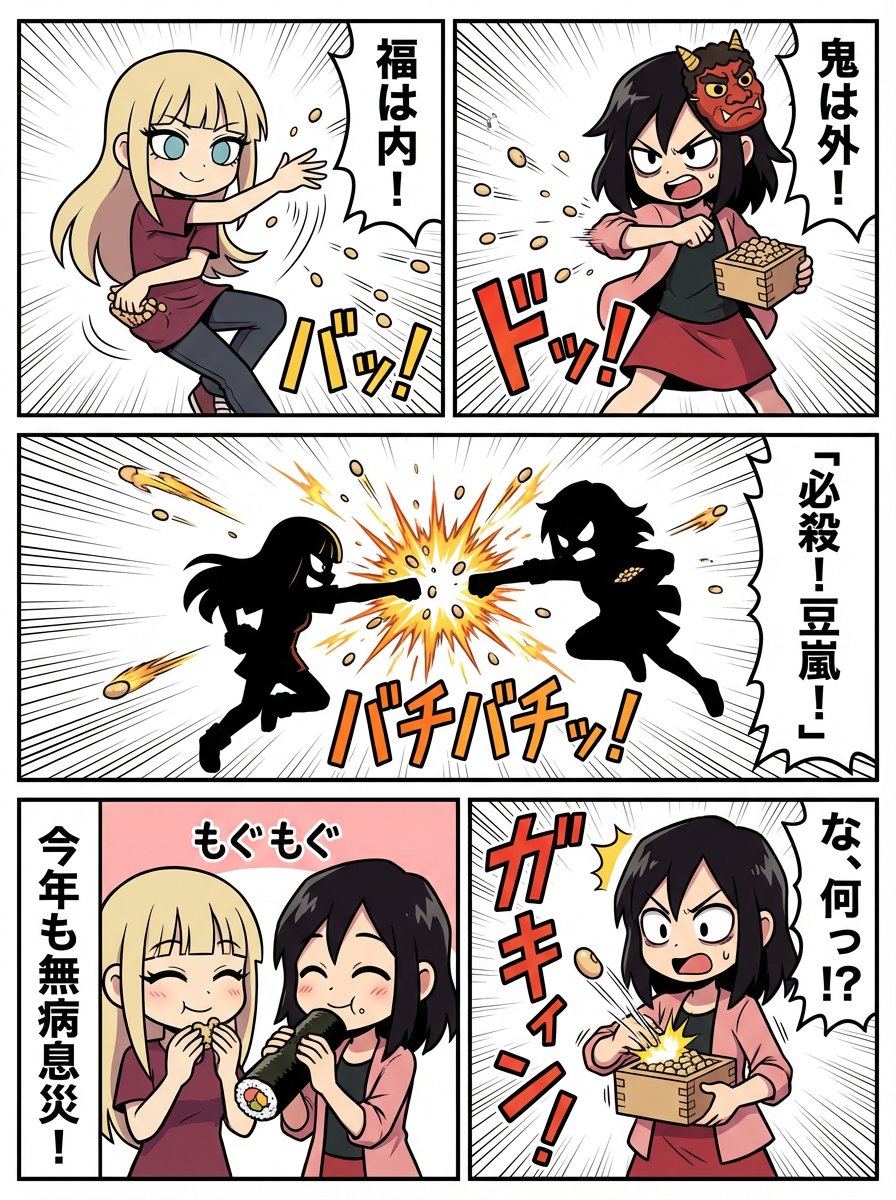
Daily Nano: Playing with Shadows 4-Panel Comic

Daily Nano: Playing with Shadows 4-Panel Comic

[Today's Nano] Today's theme is {argument name="theme" default="Playing with Shadows"} I'd be happy if the last panel makes you chuckle a little 😊 👉This 4-panel comic was also created with nano banana pro

Cinematic Storyboard Contact Sheet Prompt for Nano Banana Pro

Cinematic Storyboard Contact Sheet Prompt for Nano Banana Pro

A 3x3 cinematic storyboard contact sheet consisting of 9 distinct panels arranged in a grid. The sequence features a young woman with {argument name="hair color" default="platinum blonde"} hair in a frozen alpine winter setting. The panels display various angles and shots: Close-ups: Focusing on her rosy cheeks, blue-grey eyes, and snowflakes on her eyelashes. Medium shots: Showing her wrapped in a {argument name="coat color" default="black"} wool coat and blue knit scarf, holding a bouquet of dried white flowers. Wide shots: Capturing her standing alone on the frozen lake with towering snowy mountains in the background. The lighting is consistent moody blue-hour twilight across all frames. High-quality film photography aesthetic, photorealistic, 8k resolution, coherent character and color grading.

Existential Cinematic Solitude Film Still

Existential Cinematic Solitude Film Still

[{argument name="subject" default="Subject"}], profound solitude captured in cinema, hyper-real film still drenched in emotional weight, cold blue hour lighting with dying warmth at the edges, rain-streaked glass creating liquid distortions, shallow depth of field emphasizing loneliness, muted desaturated palette with isolated color accents, slow-motion implied stillness, fine analog grain reminiscent of 1970s existential cinema, lens flares bleeding into darkness, ray-traced reflections in pooling water, breath visible in cold air, negative space dominating the frame, crushing atmospheric pressure, intimate yet distant camera positioning, Vilmos Zsigmond-inspired melancholic cinematography, the weight of unspoken grief.

Detective Evidence Board Generation

Detective Evidence Board Generation

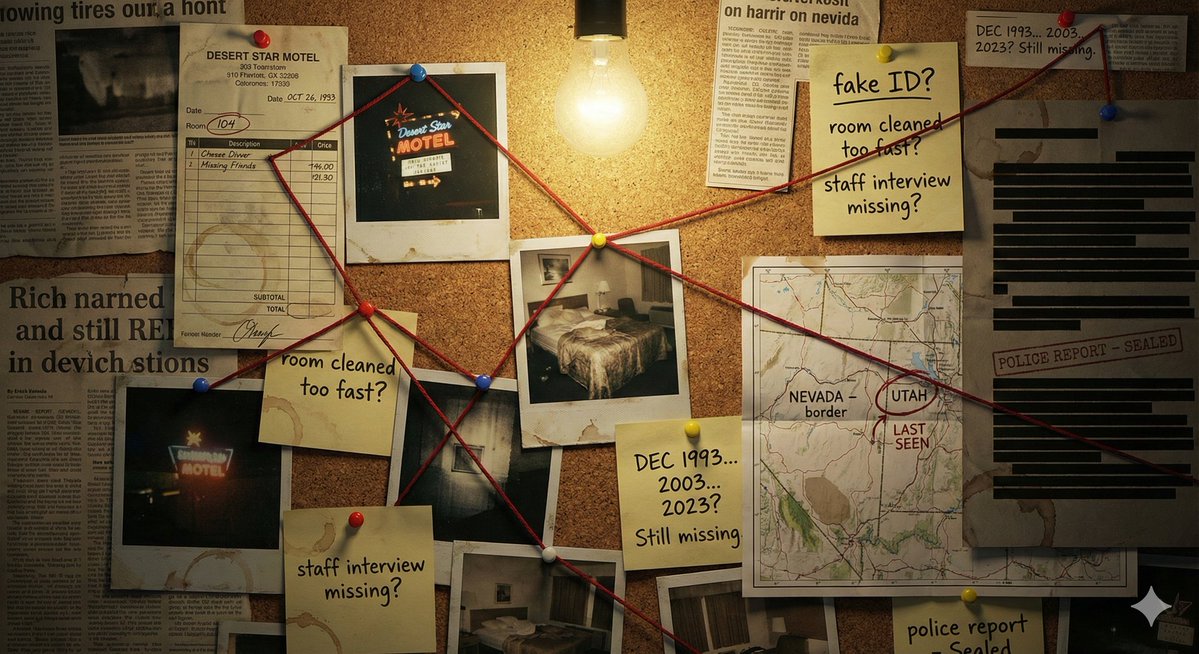
"A detective's evidence board investigating \\{argument name="subject/mystery" default="[SUBJECT/MYSTERY]"}\\\. Cork surface covered with pinned items: polaroid photographs with handwritten dates, a street map with circled locations, newspaper clippings with highlighted passages, sticky notes with theories and question marks, and printed documents with redacted black bars. Red string connects related evidence across the board, creating a web of connections. Thumbtacks in primary colors. A single bare bulb casts dramatic shadows. Coffee ring stains on some papers. The atmosphere is obsessive, late-night, noir—someone has been piecing this together for months. A few pins have fallen, suggesting frantic recent activity."

Gemini Nano Banana Pro 3.0 Stranger Things Edition Prompt

Gemini Nano Banana Pro 3.0 Stranger Things Edition Prompt

You are a storyteller for the Gemini Nano Banana Pro 3.0, specializing in the aesthetic and narrative style of 'Stranger Things'. Write a short story about a {argument name="character name" default="young boy"} named {argument name="boy's name" default="Mike"} who, while exploring the woods near his suburban home in the 1980s, discovers a mysterious {argument name="object" default="glowing orb"} that hums with an otherworldly energy. The discovery must lead to the first encounter with a supernatural element, setting the tone for a thrilling adventure.

Eraser Gun Style Prompt for Nano Banana Pro (Fighting Pose Stage)

Eraser Gun Style Prompt for Nano Banana Pro (Fighting Pose Stage)

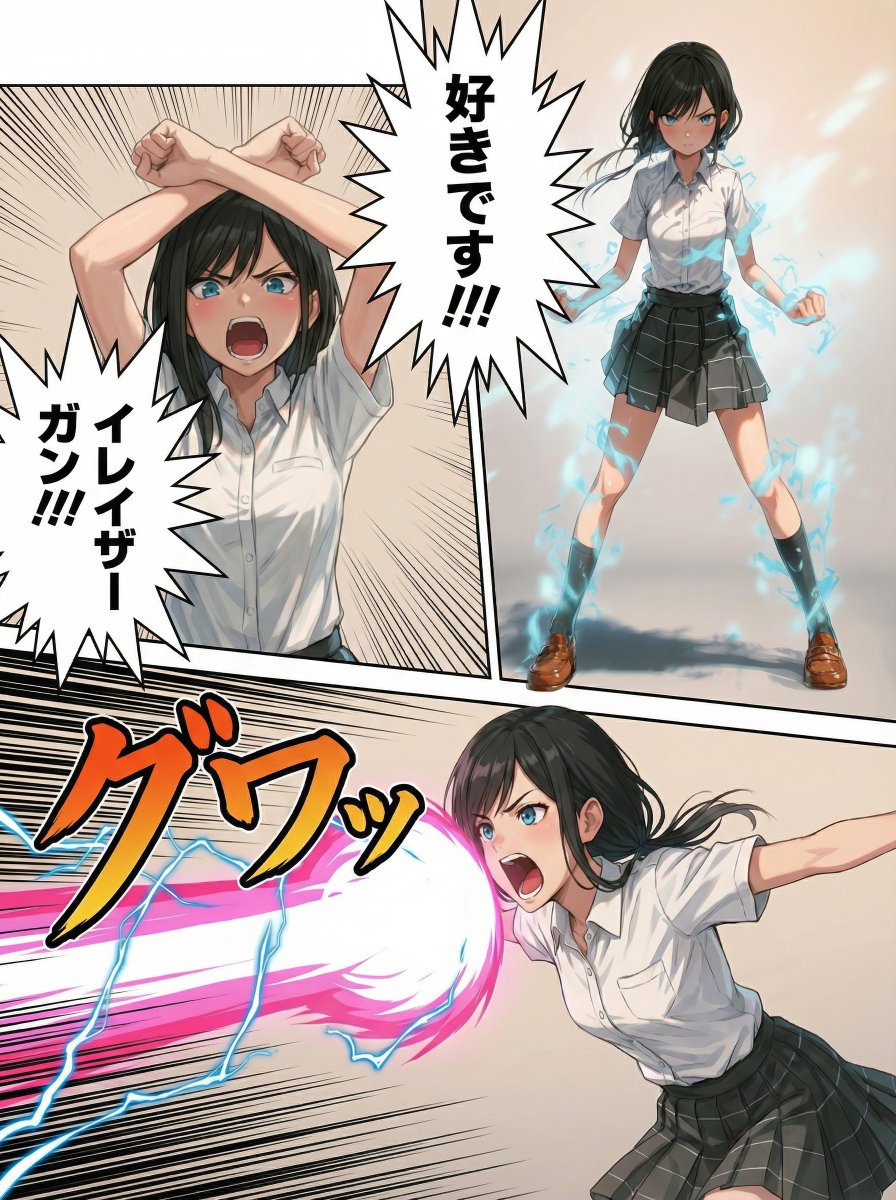
subject: >   The character exactly as shown in the reference image,   preserving the original art style, proportions, line quality,   coloring, texture, and overall visual appearance without alteration. composition: >   Bust-up shot, frontal view,   framing from the upper chest to the top of the head,   balanced composition consistent with the reference image style.   Aspect ratio is 16:9. action: >   The character performs a clear pre-attack pose,   crossing both arms above the head with clenched fists,   slightly lowering the hips (implied through posture and shoulder angle),   while shouting loudly with mouth wide open.   The posture conveys physical tension and preparation.   No additional visual effects. location: >   Same environment as the reference image,   unchanged background and setting. style: >   Identical to the reference image.   Do not modify or reinterpret the art style in any way. camera_lighting: >   Same camera angle, lighting direction, and shading   as the reference image, without enhancement or dramatization. colors: >   Preserve the original color palette exactly as in the reference image. text: >   None. edit_instructions: >   Change only the character’s pose:   bust-up framing,   arms crossed above the head,   shouting facial expression.   Lowered hips are implied through upper-body posture only.   Do not add effects, glow, motion lines, or stylistic changes. references: >   Reference Image A: character identity, art style, and environment. extras: >   High fidelity reproduction of the reference image style,   no stylization, no reinterpretation.

Nano Banana Pro Manga Generation Prompt with Character Consistency Rules

Nano Banana Pro Manga Generation Prompt with Character Consistency Rules

Please generate a manga page. #Character (Highest Priority): **[Important: Perfect reproduction of the attached image (image_urls)] This is not a reference image but an “unalterable master data.” Strictly adhere to the following processes in all generated panels.** 1. **Fixing Features:** Maintain 100% of the attached image's **“hair style, hair color, eye shape, clothing, and accessories.”** Unauthorized arrangements or simplifications are prohibited. 2. **Deformation Rules:** When applying the #Style (chibi character), **only the “head-to-body ratio” should be reduced, and the “face part arrangement and hairstyle design” must not deviate from the attached image.** 3. **Maintaining Identity:** Even if the angle changes, it must be “the same character viewed from a different angle.” Do not change the face to look like a different person. 4. **Do not cause “Prompt Bleed (instruction leakage).”** #Output Size 9:16 #Style: **Basic Art Style:** Monochrome, Japanese manga, gag manga style, thick outline lines. **Style prompt:** Japanese manga, chibi style, thick outline lines, monochrome. **Format:** Vertical writing, Japanese panel layout read from right to left. #Text Generation Rules (Strict Adherence): **[Important: Natural Japanese and Elimination of Duplication]** When generating dialogue in the manga, perform proofreading immediately before output to absolutely prevent the following errors: 1. **Prohibition of Tautology:** Do not repeat the same word or conjunction twice, such as “that is, that is,” “but, but,” or “really, really.” Stuttering expressions are prohibited. 2. **Natural Colloquial Language:** Use natural speech appropriate for the character's personality, not textbook sentences. 3. **Garbled Text Check:** Confirm that Kanji and Hiragana are not corrupted. #Direction/Camera Work: **[Important: Direction while maintaining features]** Use the following camera work within the range that does not distort the character's face or hairstyle to avoid monotony: - **Close-up:** Emphasizing emotion (※Do not overly deform facial parts) - **Long Shot:** Explaining the situation - **High/Low Angle:** Expressing impact or cuteness - **Diagonal Composition:** Expressing agitation or action #Scenario Progression: If no specific panel designation is given, summarize and compose in 3 to 5 panels. Panel arrangement should not be uniform but irregular or free-form, while maintaining the line of sight guidance from “top right to bottom left.” #Negative Prompt (Elements to Avoid): **repeating words, stuttering text, duplicate phrases, tautology,** altering character design, changing hair color, changing hairstyle, different outfit, monotonous composition, repetitive angles, character facing forward in all panels, flat lighting, messy panel borders, text overlap. #Scenario: {argument name="scenario" default="Think of the continuation of the attached manga."}

Multi-Step Comic Generation with MJ and Nano Banana Pro

Multi-Step Comic Generation with MJ and Nano Banana Pro

Step 1: Generate a satisfactory base image: MJ Prompt: cute anime character --sref 3076266117 Step 2: Upload Image 1 to Nano Banana to generate the character: create a sheet with various emotions for this character Step 3: Upload Image 2 to Nano Banana to generate the scene: make a picture in the same style where this character stands in a street

Character Inner Monologue Comic Prompt (Japanese)

Character Inner Monologue Comic Prompt (Japanese)

# User Input (Rewrite and submit this) 【Character Settings】 {argument name="character settings" default="Brown hair, twin tails, red eyes, fangs, black cloak, white shirt"} 【Main Character's Worry】 * Content: {argument name="worry" default="I want to eat lots of donuts"} # Command You are an image generation engine. Follow the steps below to generate one image based on the user's input. **Do not output intermediate thoughts or script text. Generate the image immediately.** # Process (Internal Processing) 1. **Automatic Dialogue Determination**: * **Main Character**: Monologues the 【Worry】 input by the user. * **Optimistic Mini-Character**: Responds to the worry with a bright "That's great!" and offers support/encouragement. * **Pessimistic Mini-Character**: Anticipates the worst-case scenario for the worry, saying "No good..." and despairs. * **My-Pace Mini-Character**: **【IMPORTANT】Talks about something completely unrelated to the worry (e.g., tonight's dinner, sleepiness, hobbies).** * **Logical Mini-Character**: **【IMPORTANT】Performs a coin toss and randomly decides to speak either "For" (presenting a rational solution) or "Against" (pointing out risks).** 2. **Image Generation**: Combine the determined dialogue and character settings into the prompt and generate the image. ### Image Generation Prompt Requirements * **Aspect Ratio**: 2:3 * **Style**: Japanese comic/anime style, high quality. * **Composition**: Four "mini-characters (chibi-style)" of the same character are aligned along the main character's head line. 【IMPORTANT】The four mini-characters are lined up "in a horizontal row." 【IMPORTANT】The feet of the mini-characters are hidden (overlapping) by the main character's head or hair. * **【IMPORTANT: Prohibitions】**: * **Absolutely do not write names or roles (e.g., "Logical," "Optimistic") below or around the characters.** * **The only place text is allowed is inside the "speech bubbles."** * Bottom 1/3 of the screen: Extreme close-up of the main character's face. Serious expression. Thinking, hand on chin or mouth, gaze downward. A large horizontal thought bubble. * Top 2/3 of the screen: Four mini-characters are lined up "in a horizontal row" right behind the main character's head. * **Important**: The mini-characters are close enough that their feet are hidden by the main character's head or hair. * **Mini-Character Arrangement and Pose**: From left to right: 1. Logical: Serious face, adjusting glasses, or pointing with a finger. 2. My-Pace: Blank face, yawning, or drinking tea. 3. Pessimistic: Pale face, holding head in despair, vertical line effect. 4. Optimistic: Full smile, hands raised in joy, music note mark. * **Speech Bubbles**: Add comic-style speech bubbles to each character.

部分提示词收录自 X 平台创作者,版权归原作者所有。